



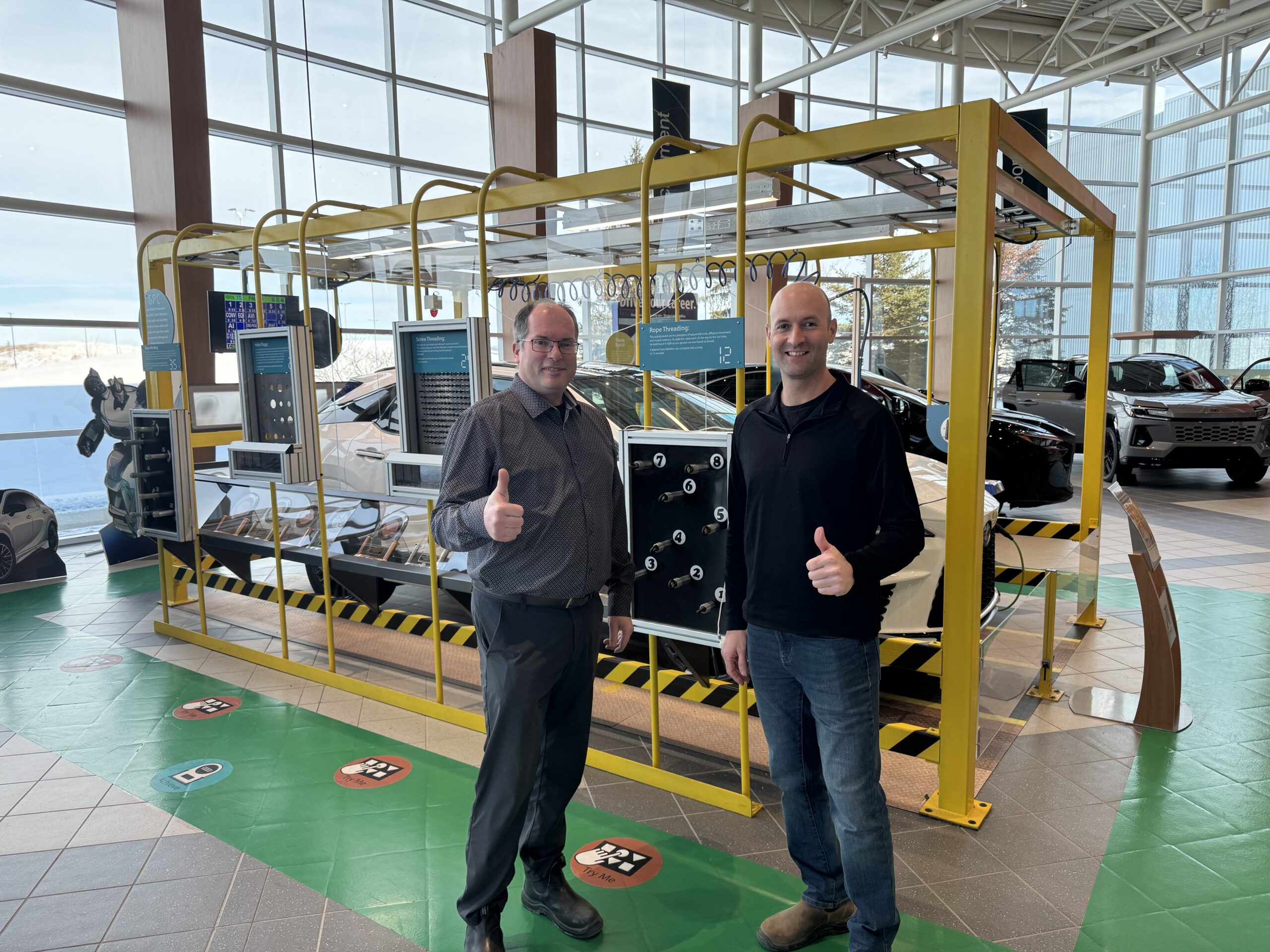
On February 26th, 2026, WMCO returned to the Toyota Motor Manufacturing Canada Cambridge Plant for another annual plant tour, giving members a chance to step inside one of the most refined production environments in the world.
The day opened at Toyota’s Experience Center, where attendees explored the thinking behind Lean Manufacturing through hands-on exhibits and practical examples. Rather than focusing purely on theory, the session framed what members should be looking for on the floor—how small decisions, consistency, and system design translate into large-scale efficiency.
Inside the plant, members saw that philosophy in practice. From synchronized workflows to the coordination between skilled team members and automation, the operation highlighted how precision and flexibility can coexist. The concept of “custom mass production” was particularly evident, with multiple vehicle configurations moving seamlessly through the same production line without disruption.
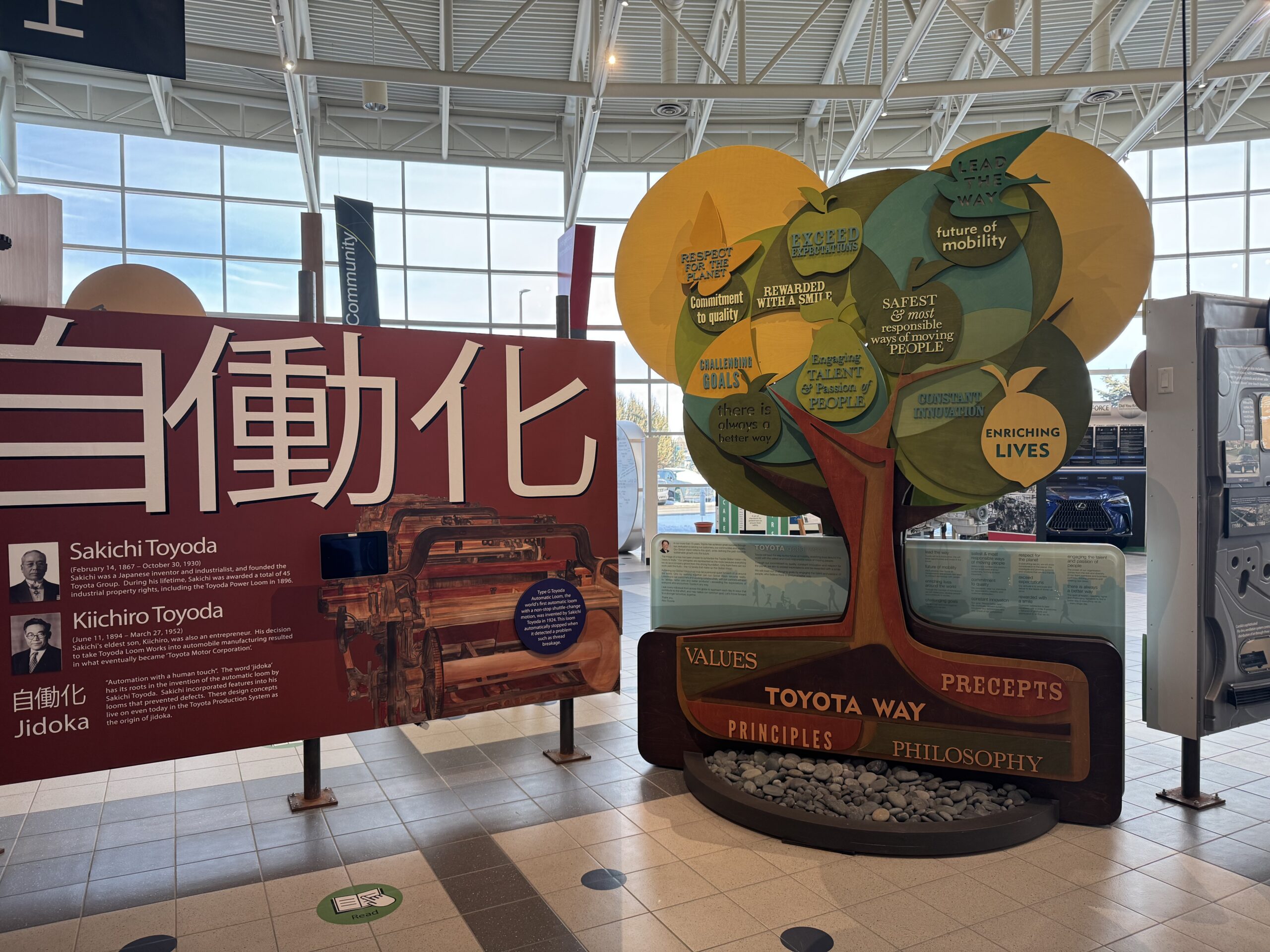
What stood out wasn’t any single piece of technology—it was the discipline of the system. Clear visual cues, standardized processes, and an embedded culture of accountability reinforced how Lean is sustained over time, not just implemented once.
Following the tour, members regrouped at Edelweiss Tavern for a networking lunch and discussion. The conversation quickly shifted from observation to application—what could realistically be adapted, what wouldn’t translate, and where incremental improvements could begin within their own facilities.
Export development also became a key part of the discussion. Members spoke about the increasing expectation from international buyers for consistency, lead time reliability, and production transparency—areas where Lean systems like Toyota’s provide a clear competitive advantage. The ability to scale quality and maintain predictable output isn’t just an operational benefit, it’s often a prerequisite for entering and sustaining export markets.

There’s always a risk with tours like this that they feel out of reach. Toyota never does. If anything, it reinforces that Lean is less about scale and more about intent and consistency—principles that apply just as much to companies preparing for export growth as they do to high-volume manufacturers.
Appreciation to everyone who joined us and contributed to the discussion. These are the kinds of environments that challenge assumptions and push the industry forward—and WMCO will continue creating opportunities for members to engage with them.

This event was produced with financial support from the Government of Canada’s Global Forest Leadership Program which supports Canada’s efforts to provide highly visible, practical and concrete responses to international requests for wildland fire and forest stewardship assistance while contributing to priorities of climate change mitigation and adaptation, gender, biodiversity, participatory development and knowledge for development.
Comments are closed.